SYDNEY, May 14, 2026 /PRNewswire/ -- Leading Australian cancer care provider, GenesisCare, is pleased to be collaborating with SeeTreat to enable suitable cancer patients access to the latest technology in offline adaptive treatment assessment. SeeTreat's ART.1 software will be rolled out at GenesisCare from July 2026 to support automated, adaptive treatment evaluation for eligible patients.
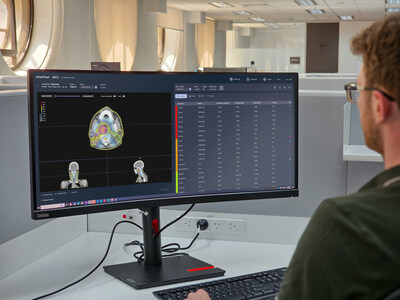
GenesisCare Chief Medical Officer, Dr Marcus Dreosti, explains that "whilst radiation treatment is proven to be a safe and highly effective cancer treatment, unwanted toxicities and side effects can occur due to changes in a patient's anatomy over the course of treatment. Optimising treatment post commencement, called 'adaptive radiotherapy', is labour intensive and complex. We're excited that through this collaboration with SeeTreat, we now have the opportunity to make adaptive radiotherapy more accessible for patients across our Australian network."
GenesisCare's decision to implement the SeeTreat ART.1 tool follows a multidisciplinary study of the software on 64 head and neck, breast, and prostate cancer patients treated on their mixed vendor linac platform assessing accuracy, efficiency and patient impact. The study showed significant potential benefits to standardising and scaling adaptive workflows, providing actionable insights to clinicians when they need it.
Radiation Oncologist, Dr Melanie Jackson, shares: "ART.1 is proving to be an easy-to-use tool to help me identify which of my patients would benefit from a new treatment plan and when this is optimal. The efficiency of the software and personalisation of care ensures we match our clinical team's effort and valuable resource time to achieve the best possible patient outcomes."
SeeTreat CEO and Founder, Dr Trang Nguyen said "GenesisCare is a truly patient-centric and innovative organisation with passionate doctors and clinical staff constantly striving to deliver the best care possible. Working with the GenesisCare team is a pleasure and we're proud to be collaborating with the group."
SeeTreat's ART.1 software has UKCA mark, CE mark, Australian ARTG registration and is FDA pending.
About SeeTreat
SeeTreat is doctor backed, physics led, software medical device company founded in 2023, led by Dr Trang Nguyen, Antonia Dalton and Professor Paul Keall. Our vision is to reduce the burden of cancer through broadly accessible software technology improving quality and accuracy of treatment. SeeTreat is a global company with a current install base in the UK, Europe, USA and Australia.
For more information visit https://www.seetreatmedical.com/ and follow SeeTreat on LinkedIn https://www.linkedin.com/company/seetreat-medical
About GenesisCare
GenesisCare is a proudly Australian-run cancer care provider, specialising in radiation therapy with a growing footprint in medical oncology, theranostics and personalised medicine. Our relentless pursuit for better care is reflected in our advanced treatment techniques, technology and contemporary service experience.
Our dedicated research team partners globally to be first movers in bringing clinical innovations to patients close to home.
Over 35,000 people a year entrust us with their care across more than 50 locations nationally.
Photo - https://mma.prnewswire.com/media/2978722/Supporting_Image.jpg
 View original content:https://www.prnewswire.co.uk/news-releases/genesiscare-and-seetreat-to-bring-personalised-offline-adaptive-monitoring-to-more-than-40-radiation-oncology-centres-across-australia-302770327.html

In Thüringen ist ein großangelegtes Forschungsprojekt zur nächsten Generation der Nanostrukturierung gestartet. Wissenschaftlerinnen und Wissenschaftler der Technischen Universität Ilmenau, der Friedrich-Schiller-Universität Jena und des Fraunhofer-Instituts für Angewandte Optik und Feinmechanik (IOF) in Jena entwickeln gemeinsam eine Hochpräzisionsmaschine, die Nanostrukturen auf Flächen von bis zu einem Quadratmeter erzeugen und vermessen soll. Die geplante 3D-Nanolithographie- und Nanomessmaschine (3D-NLM) soll dabei eine Positionierungsgenauigkeit erreichen, die kleiner ist als ein Atom. Die Deutsche Forschungsgemeinschaft (DFG) unterstützt die erste Projektphase bis 2027 im Rahmen des Programms „Neue Geräte für die Forschung“ mit vier Millionen Euro.
Mit dem Vorhaben zielt das Konsortium auf eine Größenordnung, die bestehende Anlagen deutlich übertrifft. Bisher lassen sich hochpräzise Nanostrukturen auf photonischen Bauteilen nach Angaben der Projektbeteiligten nur bis zu einem Durchmesser von etwa 30 Zentimetern zuverlässig herstellen. Die neue Anlage soll Bearbeitungen und Messungen von Bauteilen mit Kantenlängen von bis zu einem Meter ermöglichen – und damit eine mehr als dreifache Vergrößerung der nutzbaren Fläche erschließen. Die Entwicklungsarbeiten an der Maschine sind angelaufen; das Gesamtprojekt ist in drei Phasen bis 2032 angelegt.
Nanostrukturen gelten seit rund zwei Jahrzehnten als Schlüsseltechnologie, weil sie Licht gezielt beeinflussen können, indem sie dessen Wellenlänge und Ausbreitung steuern. Solche Strukturen finden sich bereits heute in großflächigen Bauteilen, etwa in Displays moderner Fernsehgeräte, die auf Nanotechnologie basieren. Nach Einschätzung der Forscherinnen und Forscher reicht die Genauigkeit bestehender industrieller Lösungen jedoch nicht aus, um künftige Anforderungen in zentralen wissenschaftlichen und technologischen Anwendungsfeldern zu erfüllen.
Die in Thüringen entstehende 3D-NLM soll genau diese Lücke adressieren. Perspektivisch könnte die Maschine zur Fertigung und Charakterisierung elektronischer und photonischer Schaltkreise ebenso eingesetzt werden wie zur Herstellung von Hochleistungsoptiken für die Erdbeobachtung. Auch in der Energieforschung sehen die Projektpartner potenzielle Einsatzfelder. Durch die Kombination aus großflächiger Bearbeitung und atomnaher Präzision erhoffen sich die Beteiligten einen technologischen Sprung, der sowohl der Grundlagenforschung als auch der Entwicklung neuer Komponenten in der Optik- und Elektronikindustrie zugutekommen könnte.