In an extension of ongoing collaboration, IBM and Lockheed Martin plan to initiate research projects with select Swiss academic institutions.
The Swiss National Supercomputing Centre at ETH Zurich will host an IBM Quantum System Two, expanding access across Swiss institutions to fuel the country's quantum ecosystem, research and workforce education.
ZURICH, Sept. 10, 2026 /PRNewswire/ -- IBM (NYSE: IBM) and Lockheed Martin (NYSE: LMT), through an offset agreement with armasuisse, Switzerland's Federal Office for Defence Procurement, today established a hub for quantum innovation at ETH Zurich, a prominent public research university. The new hub plans to host the country's first IBM Quantum System Two at the Swiss National Supercomputing Center (CSCS) in Lugano.
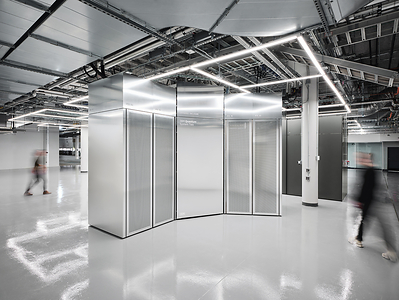
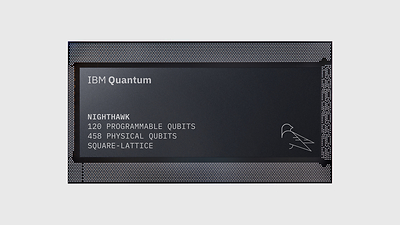
IBM will operate the IBM Quantum System Two, which will be powered by an IBM Quantum Nighthawk, the company's most advanced processor. ETH Zurich will provide expertise, resources and technologies for Swiss industries, startups and academia, including access to the quantum computer. Its delivery is expected to catalyze the development of new algorithms, technical breakthroughs, and industrial use cases, as well as anchor initiatives to foster Switzerland's workforce and talent. The project also advances the ongoing strategic collaboration between Lockheed Martin and IBM, combining Lockheed Martin innovations in quantum sensing and additive manufacturing with IBM's expertise in quantum computing and AI.
"Switzerland is deservedly recognized as a hub for global innovation, and Lockheed Martin is proud of its long history of technical collaboration within the country," said Dr. Craig Martell, Lockheed Martin vice president and chief technology officer. "This project extends the strategic relationship between Lockheed Martin and IBM in quantum and AI while positioning Switzerland as a leader in these critical, cutting-edge fields. It provides resources and expertise, develops skills and enables joint research across the Swiss commercial, defense and academic ecosystem."
"IBM has collaborated with institutions in Switzerland for almost 100 years. Our research team at our Zurich lab has led fundamental technology breakthroughs for the world and has been part of the country's science ecosystem for decades," said Alessandro Curioni, vice president, Algorithms and Applications, IBM Research and director of the Zurich Research Laboratory. "As we continue to foster innovation with the Swiss community, we are excited to have the opportunity to put world-class quantum hardware, software and expertise directly into the hands of Switzerland's thriving academic institutions and industries."
"Switzerland will gain access to essential research infrastructure that will enable us to further advance the exploration of this emerging technology and educate the talent needed to support it," said ETH Zurich President Joël Mesot, emphasizing the opportunities the new quantum computer will bring to Switzerland.
Delivering quantum to the Swiss ecosystem
Organizations that join the innovation hub through ETH Zurich will have immediate access to these resources and IBM's fleet of quantum computers available over the cloud. Additionally, upon the system's deployment by the end of 2026, ETH Zurich will provide organizations with access to Switzerland's own dedicated IBM Quantum System Two. These capabilities will enable the country's community of innovators to accelerate scientific and industrial research and build new use cases across chemistry, materials science, optimization, financial services and more. Today, IBM quantum computers are already delivering scientific value across the globe as useful tools in these fields.
IBM and Lockheed Martin expand joint research initiatives
As part of the collaboration, two planned joint development projects between IBM and Lockheed Martin include the exploration of quantum sensing applications for navigation and the improvement of additive manufacturing of metallic alloys. These projects also complement ongoing efforts by IBM and Lockheed Martin across a range of advanced technologies focused on aerospace and defense innovation.
IBM and ETH Zurich build on a legacy of collaboration
This initiative also builds upon a close and long-standing collaboration between IBM and ETH Zurich, including a recently launched 10-year effort to advance foundational algorithmic research.
The quantum education and workforce development effort includes providing the Swiss ecosystem with access to the IBM Quantum Network and IBM Quantum Platform learning offerings, including coursework, certifications, and workshops; as well as event support, such as hackathons, conferences, and partner forums.
About IBM
IBM is a leading provider of global hybrid cloud and AI, and consulting expertise. We help clients in more than 175 countries capitalize on insights from their data, streamline business processes, reduce costs and gain the competitive edge in their industries. Thousands of governments and corporate entities in critical infrastructure areas such as financial services, telecommunications and healthcare rely on IBM's hybrid cloud platform and Red Hat OpenShift to affect their digital transformations quickly, efficiently and securely. IBM's breakthrough innovations in AI, quantum computing, industry-specific cloud solutions and consulting deliver open and flexible options to our clients. All of this is backed by IBM's long-standing commitment to trust, transparency, responsibility, inclusivity and service.
Visit www.ibm.com for more information.
About Lockheed Martin
Lockheed Martin is a global defense technology company driving innovation and advancing scientific discovery. Our all-domain mission solutions and 21st Century Security® vision accelerate the delivery of transformative technologies to ensure those we serve always stay ahead of ready. More information at Lockheedmartin.com.
Media contacts:
Chris Nay
IBM Communications
cnay@us.ibm.com
Stephen Funk
IBM DACH Communications
+41-58 333 78 68
stephen.funk@ch.ibm.com
Trent Perrotto
Communications Director, Technology Transformation and Innovation, Lockheed Martin
trent.perrotto@lmco.com
O: 301-581-7005 | M: 321-272-8027

 View original content to download multimedia:https://www.prnewswire.co.uk/news-releases/ibm-lockheed-martin-announce-swiss-quantum-innovation-hub-at-eth-zurich-anchored-by-switzerlands-first-ibm-quantum-computer-302874482.html

Mit einem Gottesdienst und einer Abschlusspressekonferenz endet an diesem Donnerstag in Fulda die Herbstvollversammlung der Deutschen Bischofskonferenz. Unter der Leitung ihres neuen Vorsitzenden, des Münsteraner Bischofs Heiner Wilmer, haben die katholischen Bischöfe seit Montag eine Vielzahl gesellschafts- und kirchenpolitischer Themen beraten. Auf der Agenda standen Fragen der demokratischen Kultur in Deutschland, die Aufarbeitung sexuellen Missbrauchs, ethische Konfliktfelder wie Leihmutterschaft sowie der Umgang mit neuer Technologie wie Künstlicher Intelligenz. Hinzu kamen innerkirchliche Schwerpunkte wie die Entwicklung der Erwachsenentaufen, die Mitwirkung von Laien und der Einsatz in sozialen Medien.
Deutlich positionierten sich die Bischöfe zum politischen Klima im Land. Wilmer warnte mit Blick auf eine mögliche Regierungsbeteiligung der AfD in Sachsen-Anhalt vor einem „Paradigmenwechsel“. Die Partei stelle die Grundwerte des gesellschaftlichen Zusammenlebens infrage und wolle „ein anderes Deutschland“, sagte der Vorsitzende zum Abschluss der Beratungen. Besonders kritisch sehen die Bischöfe, dass einige Positionen der AfD aus ihrer Sicht mit dem christlichen Glauben und dem zugrunde liegenden Gottes- und Menschenbild nicht vereinbar seien.
Der DBK-Vorsitzende stellte sich demonstrativ hinter den Magdeburger Bischof Gerhard Feige und das Bistum Magdeburg, vor allem mit Blick auf Spekulationen über mögliche Folgen einer AfD-geführten Landesregierung. Diskutiert wird in diesem Zusammenhang, ob etwa der Einzug der Kirchensteuer zur Disposition stehen könnte. Die Kirche müsse „mit allem rechnen“ und stelle sich so auf, „dass wenn große Erschütterungen kommen sollten, wir gewappnet sind“, betonte Wilmer. Es dürfe nicht sein, dass ein Bistum durch politische Weichenstellungen im Nachteil sei.
Die Bischöfe sehen sich zugleich mit einem Stimmungsumschwung in Teilen ihrer eigenen Basis konfrontiert. Nach Aussage Wilm ers ist es „erschreckend“, wenn rund 30 Prozent der Katholikinnen und Katholiken in Ostdeutschland die AfD wählen, die in Sachsen-Anhalt als gesichert rechtsextrem eingestuft ist. Als Antwort auf wachsenden Antisemitismus und gesellschaftliche Polarisierung verweist die Bischofskonferenz auf die jüdisch-christliche Tradition, auf Menschenwürde und Solidarität. Auftrag der Kirche sei es, mit den Menschen zu reden, ihnen zuzuhören und so den gesellschaftlichen Zusammenhalt zu stärken.
Neben der politischen Lage blieb die Kirche bei der Vollversammlung auch mit eigenen Reform- und Krisenthemen befasst. Die Bischöfe berieten über weitere Schritte bei der Aufarbeitung von sexuellem Missbrauch und diskutierten, wie Laien stärker an Entscheidungsprozessen beteiligt werden können. Zudem rückten neue Handlungsfelder in den Blick: Die wachsende Bedeutung von Social Media und der Einsatz Künstlicher Intelligenz in Pastoral und Verwaltung werfen für die Kirche Fragen nach Verantwortung, Transparenz und ethischen Leitplanken auf. Die Beschlüsse und Leitlinien der Konferenz sollen in den kommenden Monaten in den Diözesen konkretisiert werden.



