HANNOVER, Germany, Sept. 14, 2026 /PRNewswire/ -- Kia Corporation (Kia) today unveiled the Kia PV7 at IAA Transportation 2026 in Hannover, Germany. The second model in Kia's dedicated, all-electric Platform Beyond Vehicle (PBV) lineup, the PV7 expands the brand's offering in the light commercial vehicle (LCV) segment.
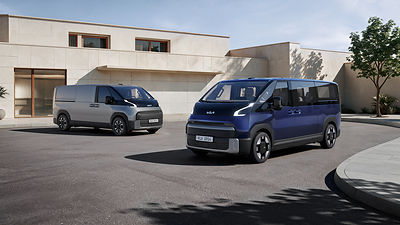
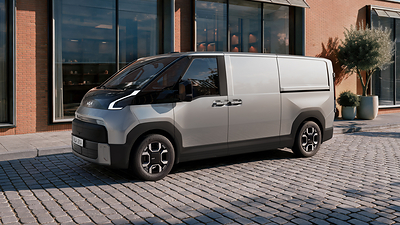
Available in Cargo and Passenger variants, the PV7 combines electric performance, flexible interior space and connected technology to support a wide range of business and mobility applications. Built on Kia's PBV-dedicated E-GMP.S architecture, it features a flat-floor design that maximizes interior space and flexibility, along with productivity-focused solutions that help customers achieve greater productivity in their day-to-day operations and drive stronger business outcomes. Kia will launch the PV7 in Korea and Europe in 2027, with additional derivatives and markets to follow.
"The PV7 marks the next step in our journey toward personalized mobility, building on the foundation established by the PV5," said Ho Sung Song, President and CEO at Kia. "By bringing together hardware developed for specific applications, business-tailored software and dedicated PBV services, the PV7 goes beyond the vehicle itself to deliver a complete business solution that helps customers achieve greater productivity, flexibility and long-term value."
How does the PV7 advance Kia's PBV strategy?
Building on the foundation established by the PV5, named the 2026 International Van of the Year, the PV7 expands the scale and scope of Kia's PBV offering. Its larger dimensions and broader application potential enable Kia to serve a wider range of customer needs, from fleet, logistics and shuttle operations to small- and medium-sized businesses and personal mobility. Kia's PV7 strategy is built around three business-focused pillars: hardware, software and service.
At the hardware level, the PV7 is built on Kia's PBV-dedicated E-GMP.S architecture, leveraging Kia's proven EV expertise and Flexible Body System[1] to support a wide range of body styles, derivatives and conversion models tailored to diverse operational needs. This comprehensive lineup enables the PV7 to serve as a business-tailored tool, providing customers with the flexibility to adapt the vehicle to their specific operational requirements.
At the software level, Kia provides the Kia Business Solutions Portal, which supports fleet management, charging, maintenance and daily operations. Standardized Fleet Management System (FMS) and connected vehicle data APIs tailored to customers' operational needs help improve fleet visibility and support more efficient day-to-day operations.
In addition, Kia offers dedicated Uptime services that support vehicle availability through real-time monitoring, predictive diagnostics and proactive maintenance management. Together, these connected solutions are designed to reduce operational disruption and support Kia's commitment to service excellence.
Kia's business-tailored service is centered on PBV-dedicated services designed to provide tailored support across diverse business operations, lower total cost of ownership and support higher vehicle uptime. Kia plans to expand the PV7 lineup to 23 variants following its 2027 launch, with the PV9 set to follow in 2029, further broadening the brand's PBV lineup and mobility solutions.
"The PV7 has been developed to give customers the flexibility to adapt as needs evolve," said Sangdae Kim, Executive Vice President and Head of Kia's PBV Business Division. "As a business-tailored tool engineered to deliver best-in-class EV performance, data-driven solutions, and total service excellence, it will enable customers to improve work efficiency, enhance productivity, and create greater value throughout the business lifecycle."
-ENDS-
Visit Kia Global Newsroom for more Kia content
For more information, visit the Kia Global Brand Site or Kia Global Newsroom. Follow our Kia Global Newsroom Instagram channel @kia.globalnews and LinkedIn account @Kia Global News
[1] Flexible Body System (FBS) is Kia's next-generation modular body architecture that enables the flexible development of diverse body styles and derivatives from a standardized vehicle structure. |

 View original content to download multimedia:https://www.prnewswire.co.uk/news-releases/kia-pv7-expands-all-electric-pbv-lineup-with-greater-capacity-and-flexibility-302877451.html

Die Exzellenzstrategie von Bund und Ländern stellt die Weichen für die nächste Förderperiode – und verschiebt die Gewichte im deutschen Wissenschaftssystem. Zu den bundesweit fünf neuen Exzellenzstandorten gehören die Technische Universität Darmstadt, die Goethe-Universität Frankfurt und die Johannes Gutenberg-Universität Mainz, die sich als Allianz der Rhein-Main-Universitäten (RMU) durchgesetzt haben. Ebenfalls erfolgreich waren in Nordrhein-Westfalen die Universität zu Köln sowie der Verbund Ruhr Innovation Lab aus TU Dortmund und Ruhr-Universität Bochum.
Für Hessen ist die Entscheidung ein Durchbruch: Erstmals tragen Universitäten des Landes ab 2027 den Titel „Exzellenzuniversität“. Die RMU-Allianz erhält nach Angaben des hessischen Wissenschaftsministeriums über sieben Jahre eine Förderung von insgesamt bis zu 155 Millionen Euro, finanziert zu 75 Prozent vom Bund. Wissenschaftsminister Timon Gremmels spricht von den ersten Exzellenzunis in Hessen und zugleich vom ersten länderübergreifenden Verbund in der Exzellenzstrategie. Ministerpräsident Boris Rhein bezeichnet den Titel als Meilenstein für die Forschungslandschaft des Landes. Ein mittelhessischer Verbund aus den Universitäten Gießen und Marburg blieb im Wettbewerb dagegen ohne Erfolg.
Auch Nordrhein-Westfalen stärkt seine Rolle als Hochburg der Spitzenforschung. Neben der Universität Köln, die den begehrten Status nach einer früheren Förderphase von 2012 bis 2019 zurückerhält, steigt der Verbund aus TU Dortmund und Ruhr-Uni Bochum als Ruhr Innovation Lab in den Kreis der Exzellenzuniversitäten auf. Nach Angaben des Düsseldorfer Wissenschaftsministeriums baut das Land damit seine Führungsposition aus. Die Universität Bonn und die RWTH Aachen hatten ihren Exzellenzstatus bereits im Frühjahr verteidigt, sodass NRW künftig mit vier Standorten vertreten ist. Ministerpräsident Hendrik Wüst wertet dies insbesondere als Signal für die internationale Sichtbarkeit des Ruhrgebiets als Wissenschafts- und Innovationsstandort.
In Bonn gaben Bundesforschungsministerin Dorothee Bär und der niedersächsische Wissenschaftsminister Falko Mohrs als Vize-Vorsitzender der Gemeinsamen Wissenschaftskonferenz (GWK) neben den Standorten in Hessen und NRW auch die Universitäten Freiburg und Jena als neue Exzellenzunis bekannt. Für Einzeluniversitäten sieht das Programm Fördermittel von bis zu 15 Millionen Euro pro Jahr vor, bei Verbünden wie der Rhein-Main-Allianz oder dem Ruhr Innovation Lab können es bis zu 28 Millionen Euro sein. Damit wächst die Riege der Exzellenzuniversitäten, deren bisher neun Standorte – darunter Aachen, Bonn, Dresden, Hamburg, Heidelberg, Karlsruhe, München, Tübingen sowie die Berlin University Alliance – ihre Förderung bereits im Frühjahr um weitere sieben Jahre verlängert hatten. Der Titel ist jeweils an regelmäßige Überprüfungen der Fördervoraussetzungen geknüpft.




