LONDON, May 18, 2026 /PRNewswire/ -- Markel Insurance, the insurance operation within Markel Group Inc. (NYSE:MKL), today announced the appointment of Sebastian Rice to Head of Global Development – Trade Credit, effective immediately.
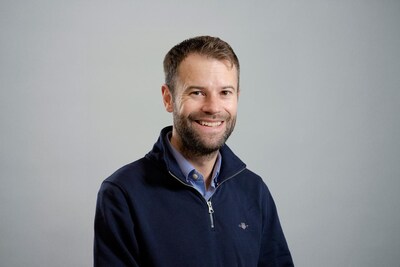
Reporting to Phil Amlot, Global Head of Trade Credit – International, Rice will work closely with him to drive innovative, solution-led underwriting and develop bespoke offerings that respond to evolving market conditions and client needs across Markel's global hubs. His role will include supporting clients navigating an increasingly complex trade environment shaped by geopolitical uncertainty, supply chain disruption and shifting credit risks.
Rice will also co-ordinate a global cohort of Trade Credit underwriters across Markel's offices in New York, Singapore, Dubai and London to align with our key partner relationships. He'll focus on business development and driving further profitable growth across the UK and Europe, with an emphasis on delivering greater capacity, tailored solutions and enhanced service for brokers and clients.
Since joining Markel two years ago, Rice has played a key role in developing new solutions, including Markel's Non-Cancellable Limits offering, which enables clients to operate with greater certainty in the event of non-payment. In his new role, he'll build on this momentum to further strengthen Markel's position as a trade credit insurer of choice for multinational businesses.
Commenting on the appointment, Amlot said: "Markel International's success and sustained growth are driven by colleagues like Seb, who are committed to working alongside our clients to deliver tailored solutions. He takes the time to understand client needs and responds with precision, rather than offering a one-size-fits-all approach.
With demand for trade credit insurance at record levels and underwriting conditions becoming increasingly complex, Seb's expertise and leadership will be invaluable as we help clients navigate increased risk and build enhanced resilience. He's already strengthened our position across the London and European markets, and I'm confident he'll bring the same discipline and commercial insight to this global role."
Rice added: "I'm proud of the profitable growth we've achieved in the London market and continental Europe since joining Markel. In a period defined by shifting supply chains and evolving economic conditions, we've focused on being a consistent and reliable partner for our brokers and clients.
This progress reflects the dedication and expertise of our underwriters. I look forward to leading the next phase of our global development and continuing to deliver solutions that support our clients' ambitions."
Rice brings more than 20 years of underwriting experience, having held roles at Euler Hermes, Atradius and QBE Europe. He joined Markel in January 2024 as Head of Business Development Europe – Trade Credit, where he strengthened the International division's non-payment protection offering across the UK and continental Europe.
About Markel Insurance
We are Markel Insurance, a leading global specialty insurer with a truly people-first approach. As the insurance operations within the Markel Group Inc. (NYSE: MKL), we leverage a broad array of capabilities and expertise to create intelligent solutions for the most complex specialty insurance needs. However, it is our people – and the deep, valued relationships they develop with colleagues, brokers, and clients – that differentiates us worldwide.
Photo - https://mma.prnewswire.com/media/2981121/Markel_Sebastian_Rice.jpg
Logo - https://mma.prnewswire.com/media/2090808/5972848/Markel_primary_Logo.jpg
 View original content:https://www.prnewswire.co.uk/news-releases/markel-international-appoints-sebastian-rice-as-head-of-global-development-trade-credit-302773539.html

Thyssenkrupp zieht beim geplanten Verkauf seiner Stahlsparte an den indischen Konkurrenten Jindal vorerst die Reißleine. Beide Unternehmen haben vereinbart, die seit September laufenden Gespräche auszusetzen. Nach Angaben des Essener Industriekonzerns soll die Neuaufstellung von Thyssenkrupp Steel nun aus eigener Kraft konsequent weiterverfolgt werden. Konzernchef Miguel López betonte, die Voraussetzungen für eine profitable Fortführung des Geschäfts seien „so gut wie lange nicht mehr“.
Im Hintergrund steht ein deutlicher Stimmungsumschwung im europäischen Stahlsektor. Thyssenkrupp verweist auf „große Fortschritte bei der Neuausrichtung“ des Segments und ein deutlich verbessertes Umfeld. Die Europäische Union habe die Bedeutung der Stahlproduktion für die Resilienz industrieller Wertschöpfungsketten erkannt und den Willen bekundet, die europäische Stahlindustrie stärker gegen globale Überkapazitäten und Dumping abzuschirmen. Zudem will Brüssel die Umstellung auf eine klimafreundliche Stahlproduktion weiter unterstützen.
Auch operativ hat sich die Lage bei Thyssenkrupp Steel zuletzt aufgehellt. Die Sparte, historischer Kern des Ruhrkonzerns, legte im laufenden Geschäft zu. Parallel läuft jedoch ein tiefgreifender Umbau: Zur Sanierung des Bereichs sollen in den kommenden Jahren bis zu 11.000 der rund 26.000 Stellen gestrichen oder ausgelagert werden. López hatte bereits zuvor erklärt, je erfolgreicher die Neuausrichtung umgesetzt werde, desto attraktiver werde das Stahlgeschäft für Kapitalmarkt und Investoren – „ob mit oder ohne Jindal“.
Der vorläufige Verkaufsstopp bedeutet keinen endgültigen Verbleib der Stahlsparte im Konzern. Mittelfristig hält Thyssenkrupp an dem Ziel fest, sich vom Stahlgeschäft zu trennen. Gewerkschaften wie die IG Metall drängen derweil auf Klarheit und fordern ein Ende der Verkaufsüberlegungen ohne „Hintertür“. Sie verlangen Gespräche über ein Modell, mit dem sich der Stahlbereich eigenständig und aus eigener Kraft verselbstständigen könnte. Während frühere Versuche für einen Verkauf, ein Joint Venture oder einen Börsengang gescheitert sind, setzt das Management nun darauf, den Wert des Bereichs vor einem möglichen nächsten Schritt weiter zu steigern.