Built on the site where TCL's journey began in 1981, the museum chronicles 45 years of innovation, transformation, and industrial progress while looking ahead to the brand's next chapter.
HUIZHOU, China, Sept. 28, 2026 /PRNewswire/ -- TCL today marked its 45th anniversary with the Inauguration Ceremony of the TCL Industrial Museum in Huizhou, the city where TCL was founded in 1981. Built on the former factory site of TCL's predecessor, TTK, the museum chronicles TCL's evolution alongside the development of China's electronics industry.
"The TCL Industrial Museum is not only about preserving the journey behind us, but also about inspiring the journey ahead," said Li Dongsheng, Founder and Chairman of TCL. "Over the past 45 years, TCL has grown through entrepreneurship, transformation and innovation. As we enter a new chapter, we will carry forward the same boldness and commitment to create new possibilities for the future."
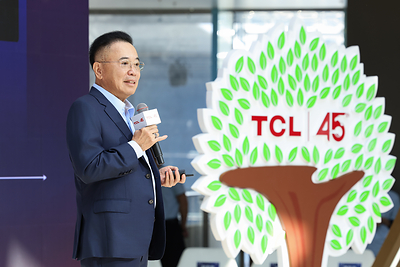
45 Years of Innovation and Transformation
Spanning more than 23,000 square meters, including over 9,000 square meters of exhibition space, the museum brings together over 3,000 curated pieces across six exhibition halls and a central atrium.
The collections cover key eras of technological development, with highlights including a 1920s Nipkow mechanical scanning disk, China's first television set, China's first commercial computer, and the world's first mass-produced printed OLED 4K display developed by TCL CSOT in 2024. The television gallery also features more than 100 vintage television sets from around the world.
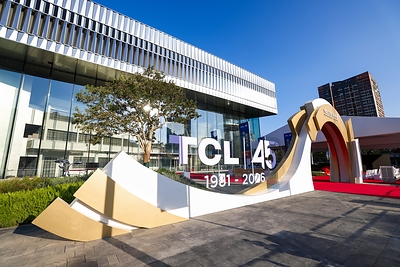
Strategic Focus Powers Global Growth
Beyond preserving products and historical milestones, the museum shows how TCL has successfully adapted its business strategy over the years as industries, technologies, and markets have evolved. One of the most consequential turning points came in 2019.
In 2019, TCL completed a major restructuring that established TCL Technology and TCL Industries as two independently operated entities. With TCL Technology focusing on display and new energy businesses, and TCL Industries specializing in smart devices and services, the restructuring has enabled each business to strengthen its strategic focus and unlock greater growth potential. From 2019 to 2025, TCL Technology's revenue more than tripled from approximately US$8.4 billion to US$27 billion, while TCL Industries' revenue more than doubled from US$11.7 billion to approximately US$24.9 billion.
Alongside revenue growth, the restructuring has also strengthened TCL's position across its core businesses. TCL TV ranked No. 2 globally by shipment volume in 2025. According to Omdia, TCL CSOT ranked No. 2 globally in overall TV panel market share that year. In clean energy, TCL Zhonghuan is the world's largest producer of solar-grade silicon crystals and a key supplier in the global silicon wafer market. Beyond pure business performance, TCL's broader progress was also recognized in 2026, when it was named one of TIME's World's Best Companies.
The Next Chapter: Technology Leadership with Purpose
With the museum sharing the journey that brought TCL to where it is today, the brand is now looking to the future with a series of initiatives. As a Worldwide Olympic and Paralympic Partner, TCL is connecting people with technology through one of the world's most universal cultural platforms, while TCLArt, TCLforHer, TCLGreen, and TCLYoung are extending the brand's engagement across culture, society, and sustainability.
At 45, the boldness and commitment that have shaped TCL's story remain central to its future. TCL will continue advancing its technology, sustainable growth and global brand-building efforts, while strengthening its role as a responsible corporate citizen and trusted technology brand.
About TCL
Founded in 1981, TCL is dedicated to empowering smarter, healthier lifestyles through next-generation experiences. Operating through two independent entities, TCL Industries and TCL Technology, TCL delivers innovative solutions spanning TVs, smartphones, audio products, smart home devices, display technologies, and clean energy.
Today, with 50 R&D centers and 47 manufacturing bases globally, TCL operates in over 160 countries and regions, reinforcing its position as a globally competitive smart technology brand. To further inspire greatness, TCL has become an official Worldwide Olympic and Paralympic Partner in the Home Audiovisual Equipment and Home Appliances category.
 View original content to download multimedia:https://www.prnewswire.co.uk/news-releases/tcl-marks-45th-anniversary-with-inauguration-of-the-tcl-industrial-museum-302891580.html

Die Innenministerkonferenz (IMK) der Länder hat ihr seit 1954 praktiziertes Einstimmigkeitsprinzip aufgegeben und setzt künftig auf Mehrheitsentscheidungen. Beschlüsse gelten nun als gemeinsame Linie der Länder, wenn mindestens 13 der 16 Innenministerinnen und Innenminister zustimmen. Die Neuregelung wurde nach Angaben eines Sprechers des Gremiums im schriftlichen Umlaufverfahren beschlossen und gilt ab sofort.
Auslöser für den Kurswechsel ist die Möglichkeit, dass in kommenden Landesregierungen die AfD das Innenressort übernehmen könnte. In Sachsen-Anhalt hatte ihr Spitzenkandidat Ulrich Siegmund zuletzt erklärt, er wolle sich im Dezember zum Ministerpräsidenten wählen lassen – ein Schritt, der eine Regierungsbildung mit AfD-Beteiligung als realistische Option erscheinen lässt. Nach der bisherigen Praxis hätte ein Land mit einem AfD-Innenminister im Zweifel IMK-Beschlüsse blockieren können.
Mit der Abkehr von der Einstimmigkeit wollen die übrigen Länder nach übereinstimmenden Angaben verhindern, dass ein einzelnes Ressort – unabhängig von der parteipolitischen Farbe – zentrale Positionierungen in Fragen der inneren Sicherheit ausbremst. Bislang sollte die Einstimmigkeit sicherstellen, dass kein Land bei sensiblen Themen überstimmt wird; ein Veto oder auch eine Enthaltung konnten Beschlüsse stoppen, abweichende Positionen wurden im Protokoll dokumentiert. Künftig soll bereits eine breite, aber nicht mehr vollständige Zustimmung als ausreichend gelten, um einen länderübergreifenden Standpunkt zu formulieren.
Formal bleibt die IMK ein informelles Gremium ohne gesetzliche Grundlage. Sie ist weder im Grundgesetz noch in Bundes- oder Landesgesetzen verankert und verfügt über keine geschriebene Geschäftsordnung. Gleichwohl entfalten ihre Beschlüsse beträchtliche Wirkung, weil sie in den Ländern politisch aufgegriffen und umgesetzt werden. Mit der nun eingeführten Mehrheitsregel verschiebt sich das Machtgefüge innerhalb dieser Runde: Konsens bleibt möglich, ist aber nicht mehr Voraussetzung dafür, dass die Innenminister gemeinsam handeln.




